

Last updated: October 11, 2026
Quick answer: use six metrics to measure how to measure quality of AI-generated articles: metrics and tools—accuracy, coverage, readability, originality, search intent fit, and edit cost. AI-generated articles are good enough only when you can prove they are accurate, useful, and publishable. The right way to measure quality is to score the draft on facts, coverage, readability, originality, SEO fit, and edit cost before a human spends an hour rescuing it. This article on how to measure quality of AI-generated articles: metrics and tools gives you a practical way to decide whether to publish, revise, or reject.
Key Takeaways
- I would judge AI article quality on six things: factual accuracy, topical coverage, readability, search intent match, originality, and the amount of human cleanup required.
- If you need a repeatable process, start with a simple rubric and a review pass; if you need scale, add automated checks from tools like Originality.ai, Copyscape, Grammarly, Hemingway, Writer.com, and Surfer SEO.
- No single metric is enough. A draft can score well for readability and still be wrong, thin, or off-intent.
- The most useful sign of quality is not a score alone; it is whether the article answers the searcher’s question better than the pages already ranking.
- The right standard depends on the use case: blog traffic, lead generation, compliance-sensitive publishing, or high-volume content operations.
What should you measure first in an AI article?

You should measure factual accuracy first, because a polished wrong answer is still a wrong answer. If an article cites a model name, law, standard, date, or statistic, I would check those claims before worrying about tone or keyword density.
The practical order is simple:
- Confirm the core claim. Read the thesis and ask whether it is true, current, and complete.
- Check named entities. Verify product names, standards, organizations, and dates against primary sources.
- Scan for unsupported numbers. Any percentage, benchmark, or price should be either sourced or removed.
- Look for hallucinated specifics. Watch for invented studies, fake tool features, or made-up quotes.
- Rate the damage. If a wrong claim changes the meaning of the article, the draft fails even if the prose is clean.
What “worked” here is easy to spot: every important claim can be traced back to a source, and no sentence forces a reader to trust the model blindly. If you want a source standard, use primary sources first and secondary sources second. For style and editorial quality, the Chicago Manual of Style and AP Stylebook are useful references; for search content quality, Google’s own guidance on helpful, people-first content is the anchor. For AI search visibility, Google’s Search Central documentation is also worth using as a baseline.
If you are publishing in regulated areas, the bar rises sharply. A health, finance, or legal article with one shaky claim is not “mostly fine”; it is unpublishable until reviewed by a subject-matter expert. That is not overcautious. It is basic risk control.
Quick check: if you had to publish the article with no edits, would you trust every factual sentence?
How do I score AI-generated content without fooling myself?
You score AI-generated content with a rubric, not with vibes. A 1-to-5 scale across separate dimensions works better than one vague “quality” number, because it shows where the draft is strong and where it fails.
I would use five scored areas:
- Accuracy
- Coverage of the topic
- Search intent match
- Readability and structure
- Originality and non-redundancy
Here is a simple decision table.
| Situation | Best Path | Why Other Options Fail |
|---|---|---|
| You publish under a brand name and need trust | Human review plus a weighted rubric | A raw AI score can hide factual errors |
| You publish at volume and need triage | Automated checks first, human review for borderline scores | Reviewing every draft manually wastes time |
| You write YMYL content | SME review before publication | SEO-only scoring misses risk |
| You need traffic, not just correctness | Add search intent and coverage scoring | A factually correct page can still miss the query |
A good rubric usually gives more weight to accuracy and intent than to grammar. I would treat grammar as necessary but not sufficient, and I would consult a professional editor or subject-matter expert for high-stakes topics, because style alone cannot verify truth. The APA Style guidance on clear writing and Google’s helpful-content guidance both point in that direction.
If you want a concrete threshold, I would not use a single “publish if above 80” rule unless your content is low-risk and well templated. In most editorial workflows, that kind of threshold becomes a crutch. A better rule is: any draft that scores below 4/5 on accuracy or intent goes back for revision.
This is also where people get fooled by fluent writing. Large language models are good at producing text that feels finished in under 5 minutes. That feeling is not evidence. A rubric keeps the team honest.
Quick check: if two editors scored the same article, would they mostly agree on where it fails?
Which tools actually help with quality checks?
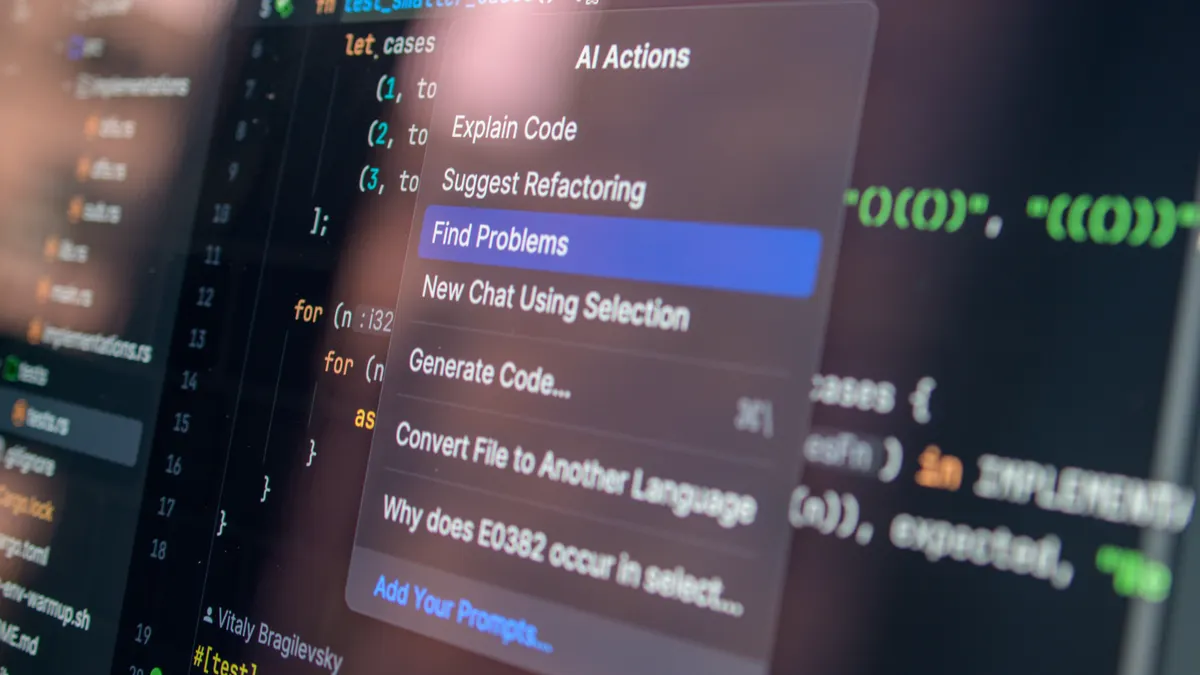
The best tools are the ones that catch a specific failure mode, not the ones that promise to judge everything. If you need originality checks, use plagiarism software; if you need style cleanup, use readability tools; if you need SEO alignment, use a search-content platform.
The usual stack looks like this:
- Originality.ai for AI-content detection and plagiarism-style checks
- Copyscape for web plagiarism comparison
- Grammarly for grammar, tone, and sentence-level cleanup
- Hemingway Editor for sentence clarity and readability
- Surfer SEO or Clearscope for topical coverage and search intent alignment
- Writer.com for brand voice and governance in team workflows
A tool is useful when it finds what a human reviewer might miss in a 10-minute pass. For example, Hemingway helps surface dense sentences, but it will not tell you whether the article answers the query. Surfer can suggest related terms and headings, but it cannot confirm truth. Originality.ai can flag AI-like writing patterns, but it should not be treated as a final verdict on quality; use it as one signal and consult a professional reviewer when accuracy matters.
The trade-off is cost and false confidence. More tools mean more signal, but also more dashboard noise. If your team is small, I would rather have three tools used consistently than seven tools nobody trusts.
If you need to choose one path, choose based on your bottleneck:
- Too many thin drafts: use a topical coverage tool.
- Too much editing time: use readability and style tools.
- Too much duplicate or near-duplicate content: use plagiarism checks.
- Too much compliance risk: use SME review and source tracing before any software pass.
Quick check: do you need help finding problems in the draft, or help deciding whether the draft belongs online at all?
How do you measure AI article quality for SEO and search intent?
You measure SEO quality by checking whether the draft answers the exact search job better than competing pages. If the keyword is informational, the article should explain. If it is commercial, it should compare. If it is transactional, it should help the reader act.
I would use this workflow:
- Open the search results for the target query. Note the dominant format: list, how-to, comparison, definition, or guide.
- Write the reader’s job in one sentence. For example: “I need to measure whether an AI draft is publishable.”
- Compare the draft against the top-ranking pages. Check whether it covers the same subtopics and avoids obvious gaps.
- Look for missing intent signals. If search results show comparison pages and your draft is only definitional, it misses the query.
- Check internal logic. The article should move from question to method to tools to decision, without wandering.
- Judge usefulness, not keyword count. A page with the right terms but no answer is still weak.
For SEO work, I would look at tools such as Google Search Console for actual query data, Surfer SEO or Clearscope for content gaps, and Ahrefs or Semrush for competitive context. Those tools help you see what the market expects, but they do not replace editorial judgment. Google Search Console is especially useful because it shows impressions, clicks, and average position over time.
A common mistake is to score “SEO quality” by how many times a phrase appears. That usually produces clumsy prose and weak pages. Search systems are better at matching intent than old-school keyword stuffing, and readers are better at detecting nonsense. If the article is for a high-value query, I would care more about whether it covers edge cases, trade-offs, and specific steps than whether it repeats the exact phrase 12 times.
Quick check: if a human searched this query, would this article save them time or send them back to the results page?
What quality metrics should I track over time?
You should track a mix of content metrics and workflow metrics, because article quality is partly the page and partly the process that produced it. If you only look at the final draft, you miss the cost of editing it.
The most useful metrics are:
- Accuracy pass rate: how often a draft clears fact-check review without major correction
- Coverage score: how many required subtopics are present
- Readability level: sentence length, paragraph length, and clarity
- Editorial revision time: how long a human spends fixing the draft
- Duplicate or near-duplicate rate: how much content repeats existing pages
- Publish decision rate: how often a draft is accepted on the first review
I would not treat all of those as equal. Revision time matters because it tells you whether AI is actually saving labor. A draft that takes 90 minutes to fix may be worse than writing from scratch. Likewise, a high readability score means little if the content is thin or generic. The Content Marketing Institute and Nielsen Norman Group both emphasize that clarity and usefulness matter more than cosmetic polish.
If you need a measurement framework, use one that tracks before and after. For example, compare AI-assisted drafts against human-only drafts over a 30-day editorial cycle. You do not need a complicated experiment to learn something useful; you need consistent scoring and enough samples to see patterns. A 30-day window is enough to spot whether revisions are dropping or rising.
The honest trade-off: metrics make quality visible, but they can also tempt teams to optimize the wrong thing. If the team starts writing for the rubric instead of the reader, the score rises and the page gets worse. That is why I would keep one human editorial override in the process.
Quick check: are your metrics telling you whether the article is good, or only whether the workflow is fast?
What are the edge cases where normal advice breaks down?
Normal advice breaks down when the article’s risk, source base, or publishing goal changes. If any of the scenarios below apply, I would change the process instead of forcing a standard checklist.
-
The article covers a fast-moving topic.
What changes: facts expire quickly, sometimes in days.
What to do instead: use a timestamped source check and a shorter approval window. News, software release notes, and platform policy updates need verification closer to publication. -
The draft is for regulated content.
What changes: a small mistake can create legal or safety risk.
What to do instead: require SME review, cite primary authorities, and reject unsupported claims. For finance or health content, treat accuracy as a gate, not a score, and consult a qualified professional before publication. -
The article is meant to rank for a branded or commercial query.
What changes: search intent is more specific, and comparison details matter.
What to do instead: score the draft against actual SERP competitors, not general writing standards. -
The source material is weak.
What changes: the model may invent details to fill gaps.
What to do instead: feed fewer assumptions into the workflow and use source-first drafting. If the input is thin, the output will be thin or fabricated. -
The team needs high-volume output.
What changes: manual review becomes the bottleneck.
What to do instead: use a triage model. Low-risk articles get automated checks; high-risk ones get full editorial review. -
The article must sound distinctly on-brand.
What changes: generic polish is not enough.
What to do instead: score voice consistency separately from grammar. A clean article can still sound like nobody on earth wrote it.
This is where a generic “use AI detectors” article goes wrong. Detection tools are only one signal, and they are not the same as quality. A piece can read human and still be inaccurate; it can read AI-like and still be excellent.
Quick check: is your problem quality, compliance, brand voice, or production speed?
How do I set up a practical review workflow?
You set up a practical workflow by deciding which checks happen before a draft reaches a human and which checks happen after. If every article gets every tool pass, the process gets slow fast.
A workable sequence looks like this:
- Define the article type. Blog post, comparison page, product explainer, or regulated article all need different standards.
- Set the must-pass criteria. For example: no factual errors, no plagiarism flags, and intent match above your internal threshold.
- Run automated checks. Use grammar, plagiarism, readability, and topical tools before human review.
- Apply the editorial rubric. Score the draft on accuracy, coverage, intent, and brand fit.
- Send only the borderline or high-risk drafts to senior review. That keeps the queue sane.
- Track what changed. If a draft needs heavy rewrites every time, the prompt, outline, or source set is the real problem.
For teams, I would document the process in a shared checklist and keep the scoring simple. Too many sub-scores turn review into bookkeeping. If the process takes longer than the article itself should take, the system is wrong.
The best workflow is not the fanciest one. It is the one that catches bad drafts early, lets good drafts move quickly, and tells you why the next draft improved or failed. That is how you measure quality of AI-generated articles: metrics and tools without turning editing into bureaucracy.
Drafted with AI; not yet reviewed by a person.