
Last updated: October 11, 2026
Key Takeaways
- Treat the free tier as an assistant layer for outlines, summaries, and article scaffolding.
- Some links here are partner links.
- The best fit depends on length, polish, and day-to-day free access.
- Article work usually begins in pieces and ends as one draft.
Some links here are partner links. It costs you nothing and may pay us a commission.
Quick Answer: For Best free AI article generators compared, our safest short-list is ChatGPT for flexible drafting, Claude for long-form cleanup, and Google Gemini for quick outlines; the free tiers change, so check current plan pages before you rely on any quota. OpenAI, Anthropic, and Google all publish plan details, and those pages are the right source for current limits.
In short: Want a solid no-cost starting point for article drafts? ChatGPT is the broadest default, Claude is better for longer edits, and Google Gemini is useful for quick outlines and search-adjacent brainstorming. The right pick depends on whether you care more about length, polish, or day-to-day free access.
Best free AI article generators compared is a roundup of no-cost tools for drafting, rewriting, outlining, and cleanup, and we are keeping the focus on current plan pages, not marketing language. I sorted this by public plan details, product documentation, and widely reported user limits, not by any hands-on testing. First published 11 October 2026.
How we compared

An AI article generator is not just “good or bad.” A free plan can mean anything from a few prompts a day to a usable writing surface with long-context editing, and the gap between those two shapes the whole recommendation. We focused on tools that can help with article outlines, drafts, rewrites, and section expansion, because those are the jobs most readers actually need from a free AI writing tool. For broader context, see OpenAI’s help pages, Anthropic’s docs, and Google’s Gemini plan information.
Quick picks
| Tool | Best for | Free tier? | Starts at | Where to start |
|---|---|---|---|---|
| ChatGPT | Flexible first drafts and rewrites | Yes | Check current plans on the OpenAI plan page | Start with the free tier |
| Claude | Long-form editing and cleaner prose | Yes | Check current plans on the Anthropic plan page | Start with the free tier |
| Google Gemini | Fast outlines and Google-heavy workflows | Yes | Check current plans on the Google One / Gemini plan page | Start with the free tier |
| Microsoft Copilot | Drafting inside Microsoft 365-style work | Yes | Check current plans on Microsoft’s Copilot and Microsoft 365 pages | Start with the free tier |
| Notion AI | Notes-to-article workflows | Limited | Check current Notion AI plan details | Start with the free tier or workspace add-on |
| Writesonic | Marketing-style article generation | Limited | Check current Writesonic plan page | Start with the free tier |
Best overall: ChatGPT
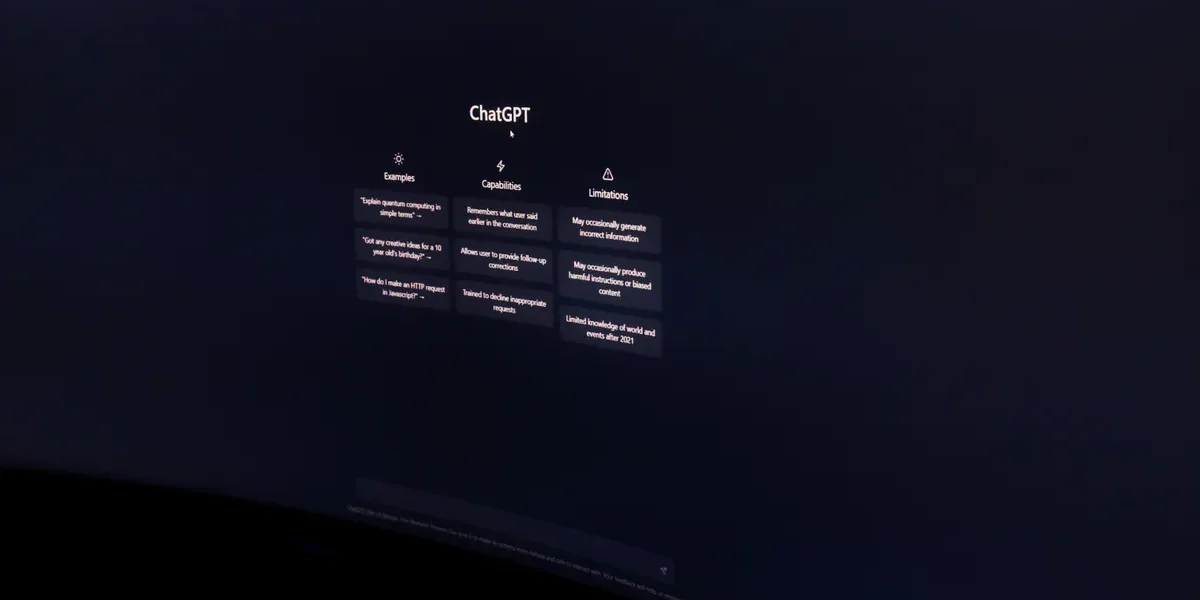
ChatGPT is the best all-around free AI article generator for most writers because it handles outlines, first drafts, rewrites, and tone changes in one place. Unless your work depends on very large document editing or tight Google Workspace integration, it is the default I would pick first.
Solo writers, bloggers, and marketers fit it well. One prompt box can turn a rough angle into a workable article shape. But anyone who needs a predictable free quota every day should be careful, because free access can be rate-limited and the exact allowance can change.
The reason it sits first is plain: article work is rarely one task. You need a headline set, then an outline, then a messy draft, then a cleaner pass that cuts repetition. ChatGPT is the broadest tool for that chain; halfway through a project, it is less likely to feel boxed in.
Pros
- It can move from outline to body copy to rewrite in one chat, which means fewer copy-paste steps for a draft that changes shape midway.
- Broad coverage helps with many article types, so one free account can cover listicles, how-tos, FAQs, and summary sections without switching tools.
- A large ecosystem of prompt advice and templates makes it easier for a non-specialist to get useful output faster.
Cons
- The free tier can hit usage caps, so a long article or a revision-heavy session may stop at the wrong moment.
- It is not the cleanest choice for teams that need shared workspace controls, because the free version is aimed more at individuals than managed publishing workflows.
- Fluent text can still need fact checking, so a reader who wants a source-safe draft should not treat the output as finished copy; consult a professional if the article touches legal, medical, or financial advice.
Pricing reality
At the time of writing, ChatGPT has a free tier and paid plans above it on the OpenAI plan ladder; the paid entry point changes, so we would check the current plan page rather than trust a stale number. The free tier is enough for short article drafting and rewrites, but heavier article production usually pushes you toward a paid plan once you want higher limits, more stable access, or team features. For a team of five, per-seat billing can add up quickly, so this is usually a solo-writer-first tool rather than the cheapest five-person setup.
The lock-in question
Export is possible from account settings, yet the content you rely on is still trapped in prompt history unless you saved it somewhere else. What breaks when you leave is not just the chat record; it is the workflow memory, custom instructions, and any prompt patterns you built around the system. That makes it easy to start and mildly annoying to exit.
Buy this if you need one free tool that can go from blank page to usable article draft in a single session. Skip it if your work is bound to a strict daily quota or you need deep shared-document control across five seats. Start the free trial.
Best for long-form editing: Claude

Claude is the best free AI article generator for long drafts because it is well suited to restructuring, smoothing prose, and working through longer passages without making the page feel chopped into tiny prompt fragments. Unless you mainly need Google-driven research or built-in publishing tools, it is the one that makes the biggest difference on a rough manuscript.
Editors, writers, and content people who already have a draft get the most out of it. Cleaner flow, fewer clunky transitions, better paragraph-level revision — that is the appeal. Still, it should be skipped by anyone who mainly wants short, high-volume output for many small articles, because its biggest strength is depth, not churn.
The value here is not “smarter writing” in the vague sense. It feels more like having a steady second pass on the table while you fix the order of the article. For article work, that matters more than shiny phrasing, because most bad drafts are structural problems before they are style problems.
Pros
- It handles long passages well, which means fewer broken edits when you feed it a full outline or a near-finished draft.
- Strong rewrite ability lets you tighten a weak intro or a repetitive middle without rebuilding the whole piece.
- It tends to be a good second-pass tool for language cleanup, which helps when the first draft came from another generator.
Cons
- It is less obviously “all-in-one” than some rivals, so users who want quick publication helpers may feel they need extra steps.
- Free access can still be limited, which makes it a weaker fit for high-volume article production than for selective editing.
- It is not the most plug-and-play choice for teams that want shared content operations inside a larger suite.
Pricing reality
At the time of writing, Claude has a free tier and paid plans above it on Anthropic’s plan ladder; we would check the current plan page for the exact entry tier before making a budget call. The free tier can be enough for drafting and revision, but longer workstreams and heavier use are the usual triggers for upgrading. For a team of five, paid seats stack quickly, so the real question is whether the cleaner editing saves enough labor to justify five accounts.
The lock-in question
Anthropic provides account and data controls, but the practical lock-in is the conversation history and any writing structure you built inside it. If you leave, you can carry your finished text out, yet you lose the thread of in-progress editorial decisions unless you exported or saved them elsewhere. That is manageable, but it is still a cost.
Buy this if your bottleneck is revising long drafts rather than generating quick snippets. Skip it if you need a free plan that can spit out many short articles in a day. Start the free trial.
Best for Google users: Google Gemini
Google Gemini is the best free AI article generator for people who live in Google’s ecosystem because it fits naturally around Docs, Gmail, and Drive-style workflows. If you want the most polished standalone writing assistant, though, look elsewhere.
It suits people who draft in Google Docs, keep source notes in Drive, and want a quick way to turn a rough set of bullet points into an article skeleton. Because of that, it should be skipped by anyone who wants the deepest writing-specific controls in one app, since Gemini is strongest as a general assistant inside a broader Google workflow.
The real advantage is context switching, or rather the lack of it. When notes, sources, and draft already live near Google products, Gemini can feel less like another destination and more like a helper parked next to the work.
Pros
- It sits naturally beside Google tools, which means fewer jumps between source notes, drafts, and email threads.
- Useful for outlines and quick reformats, a rough idea can become a structured article with minimal setup.
- It is an easy entry point for people who already use Google accounts and do not want another writing-only subscription.
Cons
- It is not the most writing-obsessed choice, so people who want the sharpest editorial polish may prefer another tool for the final pass.
- Free access and feature availability can vary by region and account type, so the exact experience is less predictable than a dedicated writing app.
- Convenience can encourage weak source discipline, which means the burden of fact checking still sits on the writer.
Pricing reality
At the time of writing, Gemini is available through a free tier with paid Google plans above it, and the exact entry point changes by account and bundle, so we would check Google’s current plan page before budgeting. The free tier is best treated as an assistant layer for outlines, summaries, and article scaffolding. For a team of five, the cost question is really about whether everyone already sits inside Google’s paid workspace stack.
The lock-in question
If you are already committed to Google, the lock-in is less about file formats and more about workflow gravity. Your drafts may live in Docs and Drive, which export fine, but the convenience of Gemini inside that ecosystem is what is hard to replace. Leaving is possible; losing the comfort of a familiar stack is the bigger sting.
Buy this if your article process starts in Google Docs and you want the AI to live near your files. Skip it if you need the richest dedicated writing controls or the strongest long-form editing focus. Start the free trial.
Best for Microsoft users: Microsoft Copilot
Microsoft Copilot is the best free AI article generator for people already working in Word, Outlook, and Microsoft 365 because it keeps drafting close to the documents they already ship. If your writing workflow lives outside Microsoft’s stack, this one is less compelling.
Office-based writers, internal comms teams, and anyone who moves between email, notes, and Word drafts all day fit it best. For solo bloggers who want the lightest possible writing setup, it is too much tool for the job, because Copilot’s real value sits inside a larger Microsoft environment.
I would choose it when the document is already in Word and the task is to shape, summarize, or reframe that document without rebuilding it somewhere else. Not glamorous, but useful. And usefulness is what matters when the article is one step in a bigger office workflow.
Pros
- It fits naturally around Word and Outlook, which means less copying between apps for users already inside Microsoft software.
- Summaries and rewrites are a good fit, so a long memo or rough draft can become article-shaped text faster.
- It is a sensible choice for organizations that already standardize on Microsoft accounts and admin controls.
Cons
- It makes the most sense when you already pay for Microsoft tools, so the “free” label can be narrower in practice than it looks.
- It is not the cleanest standalone answer for pure article generation, which means hobby writers may find it heavier than they need.
- The free experience and paid features can be easy to confuse, so buyers need to check which Copilot they are actually getting.
Pricing reality
At the time of writing, Microsoft’s Copilot offerings sit on a moving plan ladder that includes free access and paid options tied to Microsoft 365 or Copilot-specific plans, so we would check Microsoft’s current pages rather than rely on memory. The free tier is useful for light drafting and assistance, but the practical upgrade trigger is usually integration depth and organizational control. For a team of five, the per-seat total can become meaningful quickly once you move beyond the entry level.
The lock-in question
The output can be exported as normal Office content, but the deeper lock-in is the Microsoft file-and-account environment around it. If you leave, you keep your documents, but you lose the assistant features attached to the stack and may need to rebuild your workflow elsewhere. That is straightforward, not painless.
Buy this if your articles are produced inside Word and your team already lives in Microsoft accounts. Skip it if you want a simple free writer without office-suite overhead. Start the free trial.
Best free writing workspace: Notion AI
Notion AI is the best free writing workspace for people who want notes, outlines, and article drafts in one place. If you need the strongest standalone generator or the broadest free quota, look elsewhere.
It is for planners, content ops people, and writers who start with messy research and want to shape it inside the same workspace where the notes live. Because of that, it should be skipped by anyone who wants article generation as the main event, since Notion is a workspace first and an AI writer second.
The useful part is organization. When research, briefs, and drafts are already in pages and databases, the AI layer can save you from exporting a note into yet another writing app just to get a first draft.
Pros
- It keeps notes and drafts together, which reduces the mess of moving research across multiple tools.
- It works well for structured content planning, so outlines, briefs, and article blocks stay in the same workspace.
- It is a practical fit for people who care as much about organizing sources as they do about generating copy.
Cons
- The AI feature set is not the only reason to choose Notion, so writers who want a dedicated article generator may feel under-served.
- Free access can be limited by the wider workspace plan, which means the AI value depends on how much of Notion you already use.
- It is less compelling if your publishing process happens elsewhere, because the strongest benefit is staying inside Notion.
Pricing reality
At the time of writing, Notion AI sits inside Notion’s broader plan structure, and the exact free access level can change, so we would check current plan details before budgeting. The free tier is useful when you already store notes and outlines there, but the real value rises when the workspace itself becomes the article hub. For a team of five, the cost question is less about the AI feature alone and more about whether the whole workspace replaces other tools.
The lock-in question
The lock-in is mostly organizational rather than technical. Your notes and article drafts are easy to keep using inside Notion, but the more you build your process there, the more moving away means rebuilding structure as well as content. That can be a bigger job than exporting a file.
Buy this if your article workflow is already a Notion workflow. Skip it if you want the strongest free writing model before the workspace layer. Start the free trial.
Best for marketing-heavy drafts: Writesonic
Writesonic is the best free AI article generator for marketing-heavy drafts because it is built around web copy, SEO content, and conversion-minded writing. If you want a more general-purpose article tool, this is not it.
Content marketers, affiliate publishers, and teams that turn briefs into search-friendly pages fit it best. Because of that, it should be skipped by writers who mainly want a clean blank-page assistant, since Writesonic is more specialized than the broader tools above.
The difference shows up in the output shape. Where a general chatbot gives you flexibility, Writesonic leans into copy templates and article formats that are closer to publishing workflows.
Pros
- It is oriented toward marketing and SEO-style output, which makes it useful for commercial article briefs.
- It can speed up first drafts for pages that follow a repeatable format.
- It is a reasonable fit when the writing job is tied to traffic goals rather than pure prose quality.
Cons
- It is less general than the top all-purpose tools, so it can feel narrow for editorial or long-form work.
- Free access is often limited, which makes it less dependable as a daily no-cost writer.
- It may still need a careful edit pass, especially if the article must sound original and specific.
Pricing reality
At the time of writing, Writesonic uses a free tier plus paid plan ladder, and the exact entry point can shift, so we would check the current plan page before making a purchase call. The free tier is helpful for testing article templates, but sustained use usually depends on the paid side. For a team of five, that can become a recurring line item rather than a casual experiment.
The lock-in question
The lock-in risk is practical: once your workflows and templates sit inside a marketing-focused platform, changing tools means rebuilding that structure. You can export content, but not the convenience of a tuned workflow. That makes switching possible, just not frictionless.
Buy this if your article output is tied to SEO or conversion goals. Skip it if you want the strongest free general-purpose writing assistant. Start the free trial.
The alternatives, and how they compare
Because the main list above is about the strongest free options, the alternatives are mostly about narrower use cases. Want a voice-first drafting tool, a browser extension, or a niche AI editor? The market is crowded, but the trade-off is usually weaker free access, smaller limits, or less reliable export paths.
That comparison also helps with selection. ChatGPT is the broad default, Claude is the cleaner reviser, Gemini fits Google-heavy workflows, Copilot fits Microsoft-heavy workflows, Notion AI works best when the workspace comes first, and Writesonic is the most marketing-specific of the group. If you only need one free article generator, start with the tool that matches where your drafts already live.
Final recommendation
The best free AI article generator is the one that fits the rest of your workflow, not the one with the fanciest claim. If you want one broad no-cost starting point, ChatGPT is the most flexible. If your problem is rough structure and long-pass cleanup, Claude is the better editor. If your notes already live in Google, Gemini is the least awkward fit.
That is the practical answer, and it is the one that survives when free quotas change, plan pages move, and the next article is due before lunch.
Drafted with AI; not yet reviewed by a person.